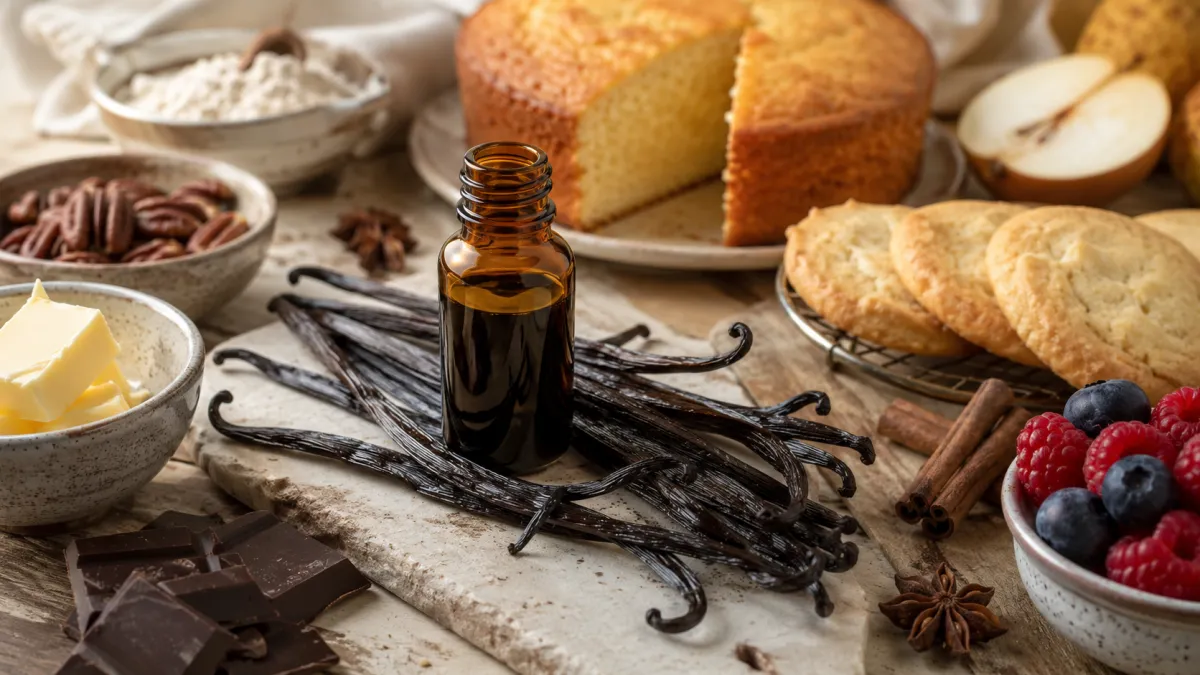
What Makes Vanilla Such a Powerful Baking Ingredient (and Why Quality Matters)
Vanilla is a powerful baking ingredient because it does more than add vanilla flavor. It brings warmth, balances sweetness, softens bitter notes, and helps other flavors—such as butter, chocolate, fruit, nuts, and spices—taste fuller. The quality of the vanilla matters because better vanilla contains a wider range of natural aromas and flavors.
Vanilla Makes Other Ingredients Taste Better
Vanilla is often treated as a background ingredient, but it plays an important part in the final taste of a baked item. Much like salt, vanilla can strengthen flavors that are already present.
In a buttery scone, vanilla can make the butter and cream taste richer. In a berry scone, it can soften the fruit’s sharpness. In chocolate baked goods, vanilla helps balance bitterness and brings out chocolate’s deeper flavor.
You may not always taste vanilla by itself, but you can often tell when it is missing.
Vanilla Affects Aroma as Well as Flavor
Much of what we experience as flavor comes from aroma. Vanilla has a warm, familiar scent that many people connect with freshly baked cookies, cakes, pastries, and other comforting foods.
That aroma can also make a baked item seem sweeter, even when no extra sugar has been added. This is one reason vanilla is so useful when a baker wants a balanced flavor instead of something that simply tastes sugary.
What Is the Difference Between Pure and Imitation Vanilla?
Pure vanilla extract is made by soaking real vanilla beans in a mixture of alcohol and water. Vanilla beans contain many different flavor and aroma compounds. Together, they create a flavor that can be creamy, floral, warm, smoky, or slightly fruity.
Imitation vanilla is usually made with vanillin, the main compound people recognize as vanilla flavor. It can add a basic vanilla taste, but it may not have the same depth or complexity as a quality pure vanilla extract.
Imitation vanilla may work in some recipes, especially when strong chocolate or spices are the main flavors. However, quality vanilla makes a greater difference in recipes where vanilla, butter, cream, or delicate fruit flavors need to stand out.
When Does Vanilla Quality Matter Most?
Quality vanilla is especially important in baked goods with simple ingredient lists. When there are fewer competing flavors, each ingredient has a bigger job to do.
Vanilla quality can be particularly noticeable in:
Traditional scones
Sugar cookies
Shortbread
Pound cake
Cheesecake
Custards and pastry cream
Whipped cream and frosting
Vanilla cakes and cupcakes
Baked goods featuring mild fruits or nuts
In these recipes, poor-quality vanilla may taste flat or overly sweet. Better vanilla can add depth without overpowering the other ingredients.
Vanilla Extract, Paste, or Whole Beans?
Different forms of vanilla can be used for different baking needs.
Pure vanilla extract is easy to measure and works well in most baked goods.
Vanilla bean paste has a thicker texture and often includes visible vanilla bean seeds. It is useful when both flavor and appearance matter.
Whole vanilla beans provide deep flavor but require more preparation. The bean is split, and the seeds are scraped out before being added to the recipe.
The best choice depends on the recipe, but freshness and quality remain important in every form.
Small Ingredients Can Make a Big Difference
Great baking is not only about following a recipe. It is about understanding what each ingredient contributes. Vanilla may be added by the teaspoon, but its effect can be found throughout the entire baked item.
At Fine Sconehenge Baking Co., we believe the smallest details can make a noticeable difference. Thoughtfully selected ingredients help create baked goods with balanced flavor, inviting aroma, and the comforting taste people hope for when they take that first bite.
Name: Fine Sconehenge Baking Co.
Address: 1320 Flynn Rd, Suite B, Camarillo, CA 93012
Phone: (805) 389-0033
